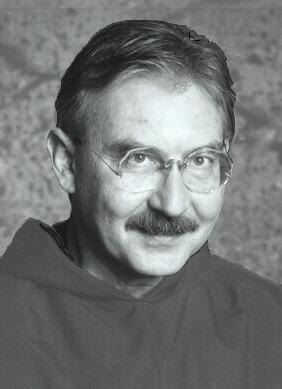
This picture was taken from the terrace of a department store, which offers a beautiful view of the church behind us. From left: David and Phyllis Garcia from Houston, Hope & Antonio Lara from Lubbock, and me. More pictures of the actual basilica once when I get a handle on the many pictures from this trip.
Friday, May 29, 2009
Now the main reason I violated my promise to never go as a chaplain on a pilgrimage, was the chance this one offered to see my favorite church in all the world, the great 6th century basilica of Istanbul. Just so you know I actually got to Hagia Sophia, here’s proof.  This picture was taken from the terrace of a department store, which offers a beautiful view of the church behind us. From left: David and Phyllis Garcia from Houston, Hope & Antonio Lara from Lubbock, and me. More pictures of the actual basilica once when I get a handle on the many pictures from this trip.
This picture was taken from the terrace of a department store, which offers a beautiful view of the church behind us. From left: David and Phyllis Garcia from Houston, Hope & Antonio Lara from Lubbock, and me. More pictures of the actual basilica once when I get a handle on the many pictures from this trip.

Saturday, May 16, 2009
It was a Thursday afternoon at 3:3 0 pm when we finally approached the bridge that led to Istanbul. This bridge spans the Bosphorus straights which join the Black Sea to the Marmara. This bridge spans two continents; it joins Asia to Europe. All traffic from the Black Sea passes through these straights. From the Marmara through the Dardanelles to the Aegean, and eventually to the Mediterranean.
 0 pm when we finally approached the bridge that led to Istanbul. This bridge spans the Bosphorus straights which join the Black Sea to the Marmara. This bridge spans two continents; it joins Asia to Europe. All traffic from the Black Sea passes through these straights. From the Marmara through the Dardanelles to the Aegean, and eventually to the Mediterranean.
 This castle was built in 1452 with a fort at the narrows, and on either side of the Bosphorus stands the priciest real estate we have ever seen. Sultans built palaces along this choice waterway. Queen Mother’s erected Mosques, large and small depending on their wealth and devotion.
  This small Mosque dates from the 18th century.
This is where today’s billionaries live. Prime real estate, like perhaps nowhere in the world. Our hotel was not here. This is Ritz Carlton territory.  A popular section of Istanbul is Takism Square. The tall building to the right is part of Takism where our hotel was located. This is where the workers gathered on Mayday to protest. Tanks and tear gas were used.
A guy named Byzan established the city of Istanbul at a location given by an Oracle. The oracle said it should be built “in the land of the blind.” When Byzan saw the Bosphorus, he said, “These people must be blind to not see this is perfect place to build a city.

When Constantine moved the capital from Rome, he built Constantinople on seven hills. This is the playground for the rich and the famous. It’s architecture tells you these are people with more money than they know what to do with. One can only stand in awe of each palace with its frills and fancy portals opening ou t to the sea.
 Here a couple have found a romantic spot by a fancy gate. It’s not quite a secluded place, for huge tankers from Russia pass through here along with commercial vessels from the various countries bordering the Black Sea, yachts, sail boats, and tourist excursions such as ours.
We rented a boat to take us through the Bosphorus. Here is our tour guide Mehmet with our tour leader Margarita Dufilho who waited till we got to Istanbul to wear her turban. Our captain stands to the right.
Here’s a couple more pictures taken from the Bosphorus straights.  First is the Queen Mother’s Mosque. Now we in America think of the Queen Mother as the mother of the queen of England. This Queen Mum, however, was the mother of one of the Sultans. There are a number of Queen Mother Mosques here in Istanbul. This one is the grandest of them all.
  Our final picture from the straights shows the gates of one of the palaces leading into its gardens behind which stand more modern structures.
Tuesday, May 12, 2009
On the following day we traveled to Nicea. When Moslems took over this area around the time of the Ottoman Empire the name of the town and lake over which it presides was changed to Iznik.  The streets of the city are cobble stone, with varying colors marking the traffic lanes.
Nicaea was constructed in 316 B.C. by Antigonius, a General of Alexander the Great. He named the town Antigonia. Six years after its construction, General Lysimahos, defeated Antigonius and named the city after his wife Nicaea. The Romans took over in 64 A.D. and surrounded the city with a wall. When the Roman Empire split in 395, Byzantines developed Nicaea, building churches, cisterns and water canals. Turks conquered Nicaea in the 11th century and made it their first capital. The city returned to Byzantine Domination in 1147. The Ottoman Sultans established their capital there in 1331, but the city lost its importance after the High Society of the Ottoman Empire moved to the newly conquered city of Istanbul in 1453.
 “In the 4th century this Basilica was erected. Architectural modifications were made after an 11th century earthquake. The church was converted into a Mosque in Ottoman period and extensive modifications were made to the building.
  Some floor mosaics have been excavated.
The council of Nicaea was convoked by Emperor Constantine in May or June of 324 and lasted to August 25, 325. The bishops of the church were summoned to deal with divisions in the church caused by Arian and to set a uniform date for the celebration of Easter. This great council convened with 300 bishops in attendance, including Ambrose of Milan, Hilary of Poitiers, and the deacon Athanasius who would succeed his bishop in Alexandria. Hosius of Cordoba came with delegates from Pope Sylvester in Rome.
 Here I am imitating Athanasius presenting his creed (found in my missalette) to the assembly. Notice the assembly seats for the bishops behind me in the sanctuary. After the bishops rejected Arian’s formula of faith, Eusebius of Caesarea proposed the baptismal creed used in his church. This gained general approval, but the majority of bishops insisted on certain additions to more clearly and explicitly counter the Arian errors: that the Son was genuinely begotten, proceeding from the very nature or essence of the Father; that the Son is by nature, not “made” by the Father; and the third most significant addition was the use of the non-biblical word “homoousion”, (consubstantial) translated in the Nicene creed as “one in Being with the Father.” This one word became a “sword of division” for decades after the Council.
 I took the occasion to lead our pilgrims in praying the creed. The breakthrough of the Council of Nicaea came in the realization that in order to define the meaning of sacred scripture, the church had to venture outside the literal words of scripture. The homoousion teaching of Nicaea was that the Son is of the same substance or nature as the Father. This refuted the fundamental notion that the begotten son is somewhat inferior to the Father who begot him. The Nicene creed became the first dogmatic definition of the Christian Church.
 An interesting fresco in this church was found over a grave, showing Christ flanked by two disciples. As we prayed the Sunday creed in this church dedicated to Holy Wisdom, it occurred to me that what we have come to know as the Nicene creed is actually the Nicene-Chalcedon creed, for the formula worked out in Nicaea ended short with a simple sentence that we also believe in the Holy Spirit. The Council of Constantinople, 56 years later, restated the Nicene creed amended by liturgical useage. When this was presented to the Council of Chalcedon in 451, the fathers of the church decided to extend to the Holy Spirit the same privileges that Nicaea had extended to the Son. So at Chalcedon we finally arrived at the present formula used in our Sunday worship: “who proceeds from the Father and the Son [and] with the Father and the Son is [equally] worshiped and glorified.”
 I have photshopped this very faded fresco to bring out Jesus’ hand to the left. Notice first two fingers joined to the thumb with the remaining two fingers upright as Jesus gives his blessing. This symbolizes the teaching of the Nicene creed: two natures and three persons.
An interesting development in the hierarchical structure of the Christian church took place at the Council of Nicaea. The fathers issued a number of disciplinary decrees, one of which was extending the authority of the bishop of Alexandria over the regions of Libya and all of Egypt, thus setting up Metropolitan sees to govern various dioceses within their territorial jurisdiction. We see here the inception of the five great patriarchates of Constantinople, Rome, Alexandria, Antioch and Jerusalem. What continues to irk the Eastern Orthodox churches is that the Patriarch of Rome claimed precedence over the other Patriarchs. So to this day our pope can only meet the Eastern Patriarchs with success, as a brother, not as a superior.
 This photo was taken of Suzanne Treis OCDS from Washington DC who took most of the pictures I have posted. She is joined by our Turkish Guide Mehmet Cuhadar in front of the Holy Wisdom basilica in Nicaea.
 The streets of the city are cobble stone, with varying colors marking the traffic lanes.
Nicaea was constructed in 316 B.C. by Antigonius, a General of Alexander the Great. He named the town Antigonia. Six years after its construction, General Lysimahos, defeated Antigonius and named the city after his wife Nicaea. The Romans took over in 64 A.D. and surrounded the city with a wall. When the Roman Empire split in 395, Byzantines developed Nicaea, building churches, cisterns and water canals. Turks conquered Nicaea in the 11th century and made it their first capital. The city returned to Byzantine Domination in 1147. The Ottoman Sultans established their capital there in 1331, but the city lost its importance after the High Society of the Ottoman Empire moved to the newly conquered city of Istanbul in 1453.
 “In the 4th century this Basilica was erected. Architectural modifications were made after an 11th century earthquake. The church was converted into a Mosque in Ottoman period and extensive modifications were made to the building.
  Some floor mosaics have been excavated.
The council of Nicaea was convoked by Emperor Constantine in May or June of 324 and lasted to August 25, 325. The bishops of the church were summoned to deal with divisions in the church caused by Arian and to set a uniform date for the celebration of Easter. This great council convened with 300 bishops in attendance, including Ambrose of Milan, Hilary of Poitiers, and the deacon Athanasius who would succeed his bishop in Alexandria. Hosius of Cordoba came with delegates from Pope Sylvester in Rome.
 Here I am imitating Athanasius presenting his creed (found in my missalette) to the assembly. Notice the assembly seats for the bishops behind me in the sanctuary. After the bishops rejected Arian’s formula of faith, Eusebius of Caesarea proposed the baptismal creed used in his church. This gained general approval, but the majority of bishops insisted on certain additions to more clearly and explicitly counter the Arian errors: that the Son was genuinely begotten, proceeding from the very nature or essence of the Father; that the Son is by nature, not “made” by the Father; and the third most significant addition was the use of the non-biblical word “homoousion”, (consubstantial) translated in the Nicene creed as “one in Being with the Father.” This one word became a “sword of division” for decades after the Council.
 I took the occasion to lead our pilgrims in praying the creed. The breakthrough of the Council of Nicaea came in the realization that in order to define the meaning of sacred scripture, the church had to venture outside the literal words of scripture. The homoousion teaching of Nicaea was that the Son is of the same substance or nature as the Father. This refuted the fundamental notion that the begotten son is somewhat inferior to the Father who begot him. The Nicene creed became the first dogmatic definition of the Christian Church.
 An interesting fresco in this church was found over a grave, showing Christ flanked by two disciples. As we prayed the Sunday creed in this church dedicated to Holy Wisdom, it occurred to me that what we have come to know as the Nicene creed is actually the Nicene-Chalcedon creed, for the formula worked out in Nicaea ended short with a simple sentence that we also believe in the Holy Spirit. The Council of Constantinople, 56 years later, restated the Nicene creed amended by liturgical useage. When this was presented to the Council of Chalcedon in 451, the fathers of the church decided to extend to the Holy Spirit the same privileges that Nicaea had extended to the Son. So at Chalcedon we finally arrived at the present formula used in our Sunday worship: “who proceeds from the Father and the Son [and] with the Father and the Son is [equally] worshiped and glorified.”
 I have photshopped this very faded fresco to bring out Jesus’ hand to the left. Notice first two fingers joined to the thumb with the remaining two fingers upright as Jesus gives his blessing. This symbolizes the teaching of the Nicene creed: two natures and three persons.
An interesting development in the hierarchical structure of the Christian church took place at the Council of Nicaea. The fathers issued a number of disciplinary decrees, one of which was extending the authority of the bishop of Alexandria over the regions of Libya and all of Egypt, thus setting up Metropolitan sees to govern various dioceses within their territorial jurisdiction. We see here the inception of the five great patriarchates of Constantinople, Rome, Alexandria, Antioch and Jerusalem. What continues to irk the Eastern Orthodox churches is that the Patriarch of Rome claimed precedence over the other Patriarchs. So to this day our pope can only meet the Eastern Patriarchs with success, as a brother, not as a superior.
 This photo was taken of Suzanne Treis OCDS from Washington DC who took most of the pictures I have posted. She is joined by our Turkish Guide Mehmet Cuhadar in front of the Holy Wisdom basilica in Nicaea.
Subscribe to:
Posts (Atom)